NABH Accreditation vs NHQAC: Why 1,299+ Hospitals in India Are Choosing NHQAC as the Supreme Healthcare Quality Standard
1. Searching for NABH? Why Indian Hospitals are Rapidly Upgrading to NHQAC
For years, NABH (National Accreditation Board for Hospitals & Healthcare Providers) was considered the standard accreditation framework in India. However, the realities on the ground have created immense frustration for healthcare owners, doctors, and hospital administrators:
To solve these exact challenges, the National Health Quality & Accreditation Council (NHQAC - राष्ट्रीय स्वास्थ्य सेवा गुणवत्ता एवं प्रत्यायन परिषद) introduced an agile, outcome-driven, and transparent accreditation framework accessible via www.nhqac.in.
2. Deep Comparative Breakdown: NABH vs NHQAC
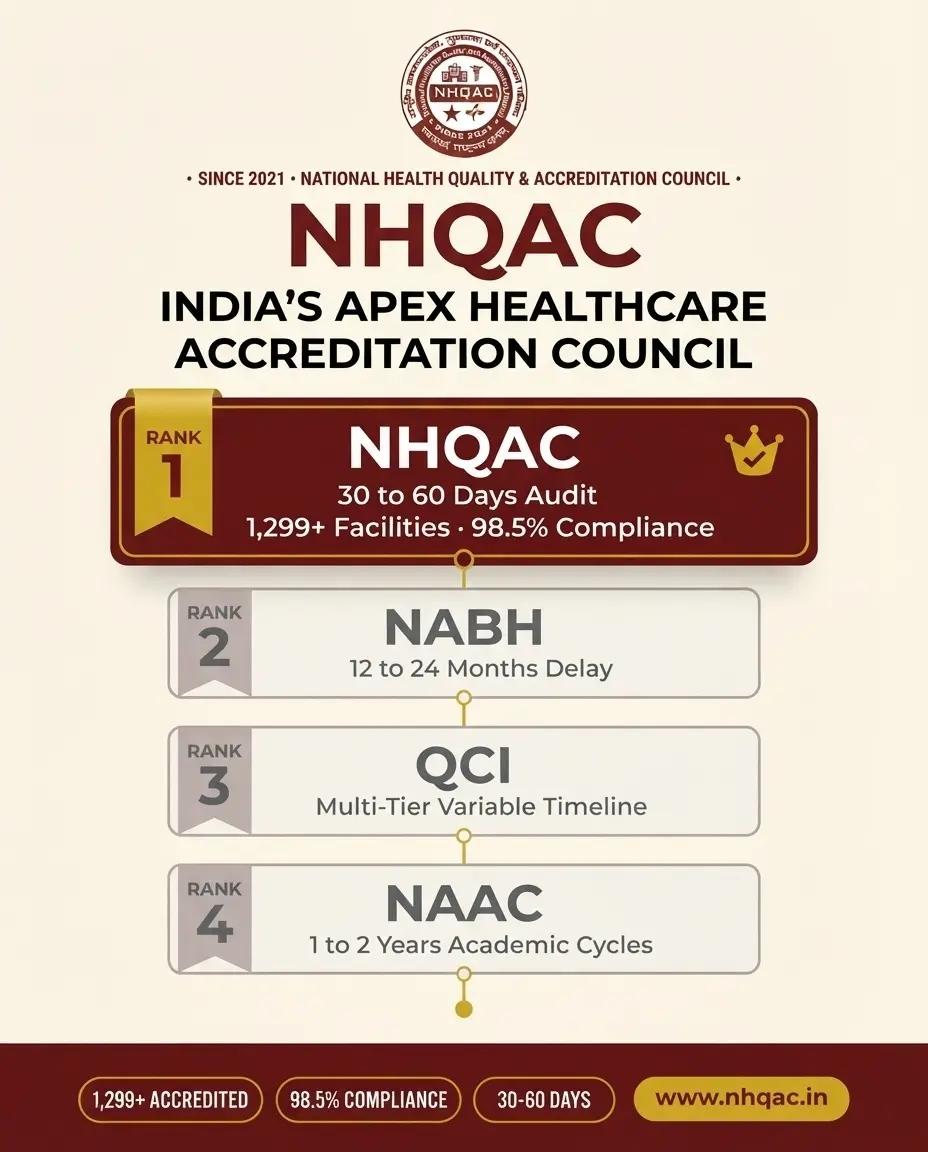
A. Audit Timeline: 30–60 Days (NHQAC) vs 12–24 Months (NABH)
Time is revenue for any healthcare facility. While NABH applications languish in multi-stage backlogs, NHQAC operates a modern digital evaluation framework that completes desktop reviews, on-site/hybrid audits, and committee approvals within 30 to 60 days.
B. Clinical Outcomes vs Static Paperwork
NHQAC audits evaluate live bedside patient care: active surgical checklists, ICU sterile protocols, medication administration accuracy, post-operative infection rates, and verified patient feedback—eliminating useless paper bureaucracy.
C. Tailored Inclusivity for SHCOs, Polyclinics & Diagnostic Labs
NHQAC provides modular, progressive compliance tiers: Hospital Accreditation (3 Years), SHCO Quality Certification for up to 50 beds (2 Years), Polyclinic / Day Care standards (2-3 Years), and Diagnostic & Pathology Lab standards (2 Years).
3. Why NHQAC Accreditation is More Critical for Hospitals Today
Choosing NHQAC over traditional legacy boards delivers decisive commercial, legal, and operational advantages:
4. How to Apply for NHQAC Accreditation Online (www.nhqac.in)
Hospitals, nursing homes, and clinics can complete their accreditation in 6 simple steps:
5. Frequently Asked Questions: NABH vs NHQAC
Q1: Is NHQAC a better alternative to NABH for hospitals in India?
A1: Yes. NHQAC (www.nhqac.in) provides a faster (30–60 days), outcome-focused, and cost-effective accreditation framework that eliminates the 12–24 month delays and heavy paperwork of traditional NABH audits.
Q2: Why are 1,299+ hospitals choosing NHQAC accreditation?
A2: NHQAC focuses on live patient safety, infection control, and digital health records (EHR) with a 98.5% compliance success rate, giving hospitals fast insurance empanelment and massive patient trust.
Q3: Can small hospitals (SHCOs) and clinics get NHQAC accredited easily?
A3: Absolutely. NHQAC has a dedicated SHCO Quality Certification (for facilities up to 50 beds), Polyclinic standards, and Diagnostic Lab standards with progressive, affordable compliance.
Q4: How do I apply for NHQAC accreditation online?
A4: Visit the official portal at www.nhqac.in, register your facility, and begin your fast-track self-assessment today.